

Tea Tree, Tea Treaty - Naardermeer Thee Hut

Introduction
Over the past two years, Haruka Matsuo — a Japanese artist and tea master living and working in the Gooi region — has been developing Tea Tree, Tea Treaty, a contemporary teahouse at the Meentwerf in Hilversum. The project aims to explore how the essence of a traditional teahouse can be reinterpreted in a contemporary context, while establishing connections to the community, soil and history of the Naardermeer.
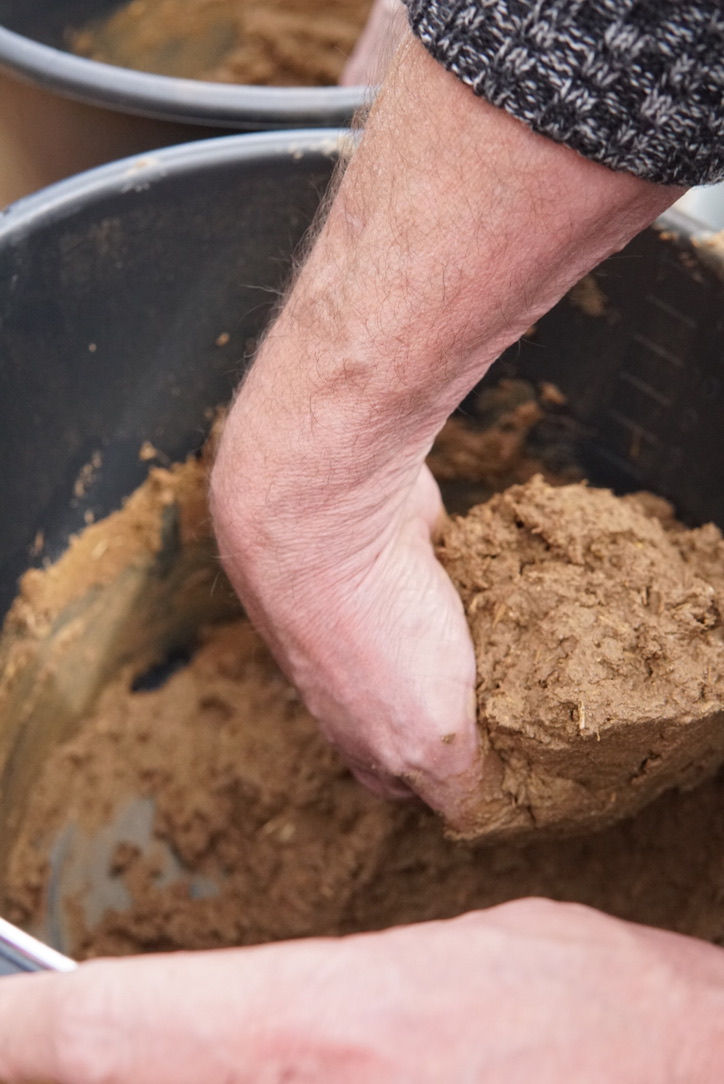
The teahouse is constructed entirely from recycled materials, including original components from the Meentwerf building (formerly a fire station), as well as clay sourced from the Naardermeer. Community involvement has been central to both the design and construction process, for example through the participation of people from the King Arthur Groep, an organisation for people with early-onset dementia.
During the final stage of construction in April 2026, participants will join Haruka in collecting clay from the Naardermeer and building an earthen wall within the teahouse.
At the core of the project is an interest in how attention, material and environment shape human experience. Drawing from the principles of the Japanese tea ceremony, the teahouse creates conditions for connection between people and place. By working with local people, local materials and embedding the histories of the Naardermeer into the structure, these relationships are made tangible.
With the physical structure nearing completion, the next phase focuses on how the space can function in practice: hosting encounters, reaching a broader and more diverse group of participants, and developing a sustainable form of organisation. The central question of this development trajectory is how the teahouse can function as both an artistic and social space, and what this requires in terms of programme development, audience engagement beyond the local context and organisational positioning. This includes developing a
programme suited to the space, positioning the project within its local and wider context, and exploring how different forms of knowledge — artistic, ecological and social — can be brought together within the framework of the tea ceremony.
The development focuses on three interconnected areas: the artistic programme (formats for gatherings and collaborators), community and audience development (engaging participants beyond the established art public and exploring the role of the artist as host), and the organisational and economic framework of the artistic practice.
As part of this trajectory, a number of small-scale programme formats and tea ceremonies will be tested in practice. These are explicitly intended as part of the development process and will test how different approaches function within the space.
One of these will take the form of an exploratory tea ceremony centred on contemplative dialogue, bringing together a small group of invited specialists alongside members of the public. The ceremony will take place largely in silence, shifting attention towards the surrounding sounds of nature and the shared presence of the participants, followed by a reflective conversation. This setting will be used to explore how the teahouse
can facilitate forms of exchange that are not primarily verbal and how different disciplines can be brought into relation through the structure of the ceremony.




Comments